
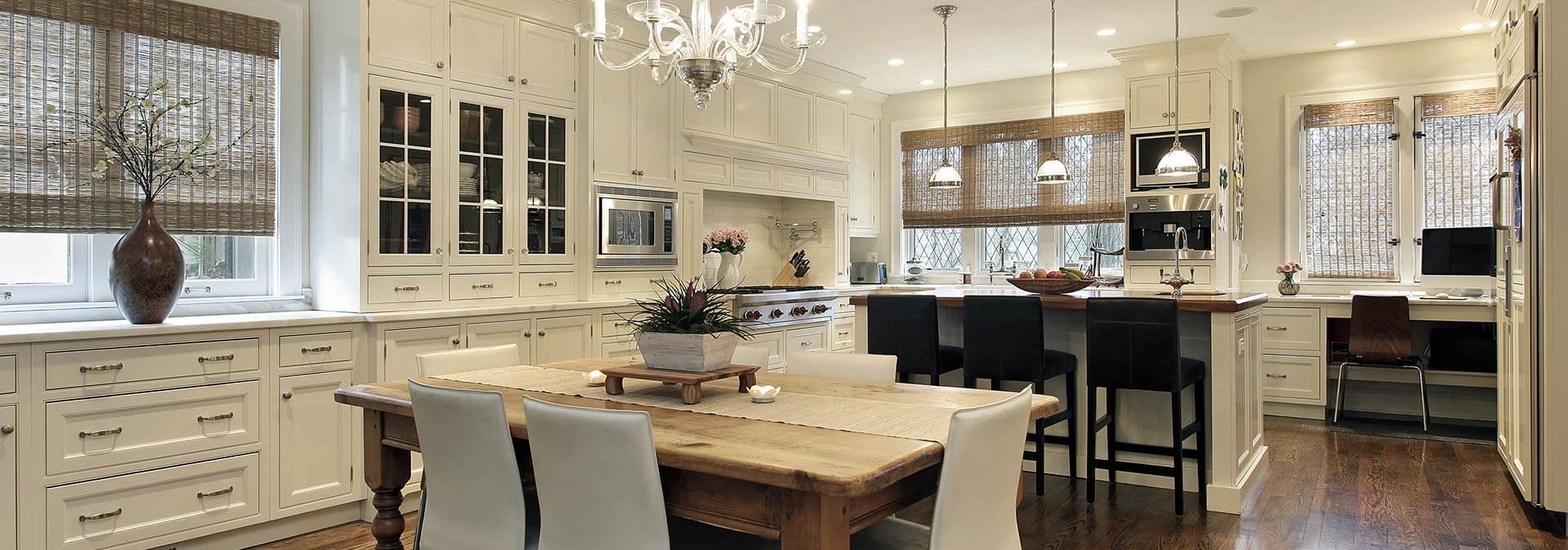

How Much Does It Cost to Renovate a Kitchen?
If you’ve started pricing out a kitchen renovation, you’ve probably noticed something frustrating: every source seems to give you a different number. One website says $15,000. Another says $80,000. A contractor’s website mentions six-figure luxury projects. None of them are lying to you — they’re just describing different kitchens.
The honest answer is that “how much does it cost to renovate a kitchen” doesn’t have a single answer, because a kitchen renovation isn’t really one project. It’s a bundle of separate decisions — cabinets, countertops, appliances, layout, labor, permits — and each one can be scaled up or down depending on your goals and your budget. A homeowner who wants new paint, hardware, and a countertop is doing a fundamentally different project than a homeowner who’s moving walls and relocating plumbing, even if they both call it a “kitchen renovation.”
This guide is meant to give you a realistic starting point. We’ll walk through national cost data from established industry sources, explain what actually drives the price of a kitchen project up or down, break down where your money tends to go, and talk specifically about what kitchen renovation costs tend to look like for homeowners in the Phoenix metro area, including Scottsdale, Tempe, Chandler, Gilbert, Paradise Valley, and Glendale. Along the way, you’ll get a framework for building your own budget, not just a number to anchor on.
How Much Does It Cost to Renovate a Kitchen?
According to Angi’s 2026 project data, the average kitchen remodel in the U.S. costs approximately $26,900 to $27,000, with most homeowners spending between roughly $14,600 and $41,600. HomeAdvisor reports a similar range, with typical per-square-foot costs of about $75 to $250. Smaller cosmetic updates can run well under $15,000, while a full gut renovation with a new layout, custom cabinetry, and premium finishes can push well past $70,000 to $130,000 or more.
That’s the honest national snapshot. But it’s really just a starting point. The real answer to your question depends on the size of your kitchen, the scope of work you’re taking on, the materials you choose, and whether your plumbing, electrical, or layout is changing. The rest of this guide walks through exactly why.
Kitchen Renovation Cost at a Glance
| Renovation Level | Typical Scope | General Cost Range* |
| Cosmetic Update | Paint, hardware, new fixtures, minor cabinet refresh | Under $15,000 |
| Partial Renovation | Cabinet refacing or partial replacement, new countertops, updated appliances | $15,000 – $30,000 |
| Mid-Range Renovation | New cabinets, countertops, flooring, appliances, some layout tweaks | $30,000 – $65,000 |
| Full Kitchen Remodel | New layout, structural changes, custom cabinetry, premium finishes | $65,000 – $130,000+ |
| Luxury/High-End Renovation | Full custom design, high-end appliances, structural work, specialty features | $130,000 and up |
*These are general industry planning ranges compiled from national cost-reporting sources, not a quote from any specific contractor. Your actual project cost will depend on your kitchen’s size, condition, and the scope you choose.
What Is Included in a Kitchen Renovation?
A full kitchen renovation typically touches most or all of the following: cabinetry, countertops, flooring, backsplash, lighting, plumbing fixtures, appliances, and often the layout itself. It usually also includes behind-the-scenes work that homeowners don’t always think about upfront — electrical updates, plumbing adjustments, drywall repair, and finishing details like trim and paint.
Some renovations stop at the surface level: new counters, new hardware, a fresh coat of paint, maybe new appliances. Others go much deeper, involving demolition down to the studs, moving walls, relocating the sink or range, and reconfiguring the entire footprint of the room. Both are legitimately “kitchen renovations,” but the price tags can differ by a factor of five or more.
What Factors Affect Kitchen Renovation Cost?
Cabinet Costs
Cabinetry is consistently the single largest line item in most kitchen budgets, often accounting for 30 to 40 percent of the total project cost. The spread here is enormous: stock cabinets bought off the shelf are the most affordable option, semi-custom cabinets offer more sizing and style flexibility at a moderate premium, and fully custom cabinetry — built to the exact dimensions and finish specifications of your kitchen — sits at the top of the price range. Refacing existing cabinet boxes with new doors and hardware, rather than replacing them entirely, is typically far less expensive than a full replacement and can dramatically change the look of a kitchen for a fraction of the cost.
Countertop Costs
Countertop material choice has a major effect on price. Laminate is the most budget-friendly option. Quartz and granite sit in the mid-to-upper range and are the most commonly chosen materials for renovated kitchens today because of their durability. Natural stone slabs like marble, and specialty materials like quartzite, tend to be the most expensive, especially with waterfall edges or large single-slab islands.
Appliance Costs
Appliance packages can range from a few thousand dollars for standard, mid-tier models to well over $20,000 for a full professional-grade or built-in luxury suite. If you’re keeping your existing appliances, this is one of the easiest ways to control cost; if you’re upgrading to a larger range, a built-in refrigerator, or commercial-style equipment, expect this line item to grow quickly — and note that larger or different appliances sometimes require electrical or gas line changes, which adds cost elsewhere.
Labor Costs
Skilled labor — including general contracting, carpentry, electrical, plumbing, and finish work — typically makes up a substantial share of the total budget, often estimated around a third of the project cost. Labor costs vary by region, by the complexity of the work, and by how many trades need to be coordinated. A kitchen with a new layout requires far more skilled labor hours than one where cabinets and counters are simply swapped in place.
Electrical and Plumbing
Updating outlets, adding under-cabinet or pendant lighting, and bringing wiring up to current code are common in most renovations. Plumbing work becomes more involved — and more expensive — the moment you relocate a sink, dishwasher, or gas line. Moving these systems means opening walls or floors, which adds both labor and, often, permitting requirements.
Flooring and Backsplash
Flooring costs depend heavily on material: tile, luxury vinyl plank, and hardwood all carry different price points and different installation complexity. Backsplash costs are usually more modest in the overall budget but can climb with hand-set tile, natural stone, or intricate patterns.
Kitchen Island
Adding a new island, especially one with plumbing (a prep sink) or electrical (outlets, pendant lighting) built in, adds both material and labor cost. A simple, non-plumbed island is far less expensive than one that requires new utility runs beneath the floor.
Layout and Structural Changes
This is one of the biggest cost multipliers in any kitchen renovation. Removing or relocating a wall — particularly a load-bearing wall that requires structural support like a beam — adds engineering, permitting, and construction costs on top of the design work. Even non-structural layout changes that move plumbing or gas lines add meaningful cost because they require new rough-in work behind the walls and floors.
Permits and Planning
Most kitchen renovations that involve plumbing, electrical, gas line, or structural work require permits from the local building department. Permit costs themselves are usually a modest part of the budget, but they add time to the schedule and require the work to be done to code, which is a good thing for your home’s safety and resale value even if it adds a step to the process.
Kitchen Renovation Cost by Project Scope
Cosmetic Update
This is the lightest level of renovation: new paint, new cabinet hardware, updated light fixtures, maybe a new backsplash or countertop, while keeping the existing cabinets, layout, and appliances in place. It’s the fastest and least disruptive way to refresh a kitchen’s look, and it’s a good option for homeowners who like their kitchen’s function but not its finishes.
Partial Renovation
A partial renovation typically involves refacing or partially replacing cabinets, installing new countertops, updating the backsplash and lighting, and possibly swapping in new appliances — all without changing the kitchen’s footprint. This tier delivers a meaningfully different look and feel without the cost of moving plumbing or walls.
Mid-Range Renovation
This is where most full renovations land. New cabinets throughout, new countertops, new flooring, new appliances, updated lighting and electrical, and often some layout adjustments that don’t require major structural work — for example, removing a peninsula or shifting a few feet of cabinetry.
Full Kitchen Remodel
A full remodel usually means a new layout, potentially a removed or relocated wall, new plumbing and electrical runs, custom or semi-custom cabinetry, and premium countertop and flooring materials. This level of project takes the most planning, the most coordination between trades, and the longest timeline.
Luxury Kitchen Renovation
At the top end, luxury renovations combine full custom cabinetry, high-end appliance packages, natural stone countertops, structural changes, and specialty features such as butler’s pantries, wine storage, or expanded islands. These projects are highly individualized, and cost is driven almost entirely by material selection and the complexity of the design.
How to Create a Kitchen Renovation Budget
Start with your “must-haves” versus your “nice-to-haves.” Decide early whether you’re keeping your current layout or changing it, since that single decision affects almost every other cost in the project. From there:
- Set a total budget range, not a single number, so you have room to make decisions as the project develops.
- Build in a contingency fund. Most experienced remodelers recommend setting aside an additional 10 to 20 percent of your budget for unexpected issues — older homes in particular can reveal outdated wiring, plumbing, or structural surprises once walls are opened.
- Prioritize the elements that affect daily function first — cabinet layout, storage, and workflow — before finalizing finish-level decisions like hardware and backsplash pattern.
- Get a detailed, itemized estimate from a licensed contractor before committing, so you understand exactly what’s included in each cost category.
- Decide on financing early if you plan to use it, so you know your real spending ceiling before design decisions are locked in.
Where Can You Save Money?
Homeowners can often reduce costs by keeping the existing kitchen layout, refacing cabinets instead of fully replacing them, choosing quartz or laminate instead of natural stone, keeping appliances that are still in good working condition, and being selective about where premium materials are used — for example, using a higher-end material on an island and a more economical option elsewhere.
Where Should You Avoid Cutting Costs?
Some corners are more expensive to cut than they appear. Underinvesting in plumbing and electrical work, or hiring unlicensed labor to save money on those trades, can create problems that cost far more to fix later — and can compromise safety. Cheap cabinet boxes and hardware tend to wear out faster than mid-grade options, which can mean redoing the work sooner than planned. And skipping permits on work that legally requires them can create real complications if you ever sell your home, since unpermitted work often has to be disclosed and can slow down or derail a sale.
How Much Does It Cost to Renovate a Kitchen in Arizona?
Kitchen renovation costs in Arizona generally follow the same national cost drivers described above — cabinetry, countertop material, appliance level, and whether the layout is changing. Arizona’s construction market has its own dynamics that can affect timelines and pricing: a large, active homebuilding and remodeling industry across Maricopa County generally means homeowners have access to a wide range of contractors and material suppliers, though demand and material costs can still shift renovation pricing from year to year, just as they do nationally.
If you’re planning a kitchen renovation cost in Arizona, it’s worth treating national ranges as your starting framework and then getting local, project-specific quotes, since labor rates, permitting requirements, and material availability can all vary by city and by the complexity of your specific home.
Kitchen Renovation Costs in Phoenix and the Surrounding Area
Homeowners researching kitchen remodel cost in Scottsdale, kitchen renovation in Tempe, or kitchen renovation cost in Phoenix will find the same underlying pattern: cosmetic refreshes sit at the lower end of the national range, full remodels with new layouts and custom finishes sit toward the middle and upper end, and luxury renovations — which are common in higher-end Scottsdale and Paradise Valley homes — can extend well beyond typical national averages depending on the scope and materials chosen.
Because the Phoenix metro includes such a wide range of home styles and ages, from newer construction in Gilbert and Chandler to older homes in central Phoenix and Glendale, the condition of your existing plumbing, electrical, and structure can meaningfully affect your project’s cost — older systems sometimes need updates that a newer home wouldn’t require. This is one more reason a detailed, in-home assessment matters more than any published average.
Questions to Ask a Kitchen Renovation Contractor
- Is your estimate itemized by category (cabinets, countertops, labor, permits, etc.), or is it a single lump sum?
- What is and isn’t included in the quoted price?
- Are you licensed, and can you provide your license number?
- Who pulls permits, and is that cost included?
- What is your process for handling unexpected issues discovered during demolition?
- What is the realistic timeline, including lead times for materials like custom cabinetry?
- How do change orders work if I decide to adjust the scope mid-project?
- Can I see examples of completed kitchen projects similar in scope to mine?
Asking these questions upfront helps you compare quotes accurately and avoid surprises once work begins.
How Renovations by Design Approaches Kitchen Renovations
Renovations by Design is a Scottsdale-based renovation company, licensed in Arizona under contractor license #314038, that works with homeowners across the Phoenix metro area, including Scottsdale, Phoenix, Paradise Valley, Arcadia, Glendale, Gilbert, Chandler, Tempe, and the broader Maricopa County region. The company is led by founder Eric Raskin, who brings decades of experience in home building and renovation, including coordinating design, materials, budgeting, and construction management for remodeling projects.
Kitchen projects with Renovations by Design typically begin with a design consultation to understand your goals, layout preferences, and material interests, followed by planning around cabinetry, countertops, and finishes, and construction coordination across the trades involved in the project. Because every kitchen and every homeowner’s goals are different, the company does not publish a fixed price list — instead, project costs are developed after understanding the specific scope, materials, and condition of your kitchen. Homeowners interested in financing options for their renovation can also discuss available home improvement financing as part of the planning process.
Conclusion
There’s no single dollar figure that answers “how much does it cost to renovate a kitchen,” because your kitchen, your goals, and your home’s existing systems are unique to you. What you can take away from national cost data is a realistic framework: cosmetic refreshes tend to run under $15,000, full mid-range remodels often land in the $30,000 to $65,000 range, and full remodels or luxury renovations with structural and layout changes commonly reach $70,000 and beyond. Where your project falls within that range depends on the size of your kitchen, the materials you choose, and whether your layout, plumbing, or electrical systems are changing.
If you’re a homeowner in Phoenix, Scottsdale, Tempe, Chandler, Gilbert, Paradise Valley, Glendale, or elsewhere in Maricopa County and you’d like to talk through your kitchen’s specific scope, goals, and budget, Renovations by Design is available to discuss your project and help you understand what a realistic estimate looks like for your home. You can reach the team at (480) 235-1147. A conversation about your kitchen’s condition, your priorities, and your budget is the most reliable way to move from general cost ranges to a number that actually applies to your project.
Frequently Asked Questions
How much to renovate a kitchen if I’m only doing a partial update?
A partial renovation — refacing cabinets, replacing countertops, and updating fixtures without changing the layout — generally falls on the lower-to-middle end of the national cost range, often well under a full remodel's total.
How much does a kitchen renovation cost per square foot?
Industry sources commonly cite roughly $75 to $250 per square foot for a typical kitchen renovation, though high-end finishes and structural changes can push costs higher than that range.
What is the biggest expense in a kitchen renovation?
Cabinetry is typically the largest single cost category, often representing 30 to 40 percent of the total budget, followed by countertops, appliances, and labor.
How can I reduce my kitchen renovation budget?
Keeping your existing layout, refacing rather than replacing cabinets, choosing mid-range countertop materials, and retaining appliances still in good condition are common ways homeowners control costs without sacrificing overall quality.
Is it cheaper to remodel or renovate a kitchen?
"Remodel" and "renovate" are often used interchangeably by homeowners and contractors alike, so cost differences come down to project scope, not terminology. A lighter-scope project is less expensive regardless of which word is used to describe it.
Does changing the kitchen layout increase the cost?
Yes. Moving plumbing, gas lines, electrical, or walls typically adds meaningful cost because it requires additional labor, materials, and often permitting beyond a straightforward finish-level update.
How much should I budget for a kitchen remodel?
Start with the national ranges as a baseline, then add a contingency of roughly 10 to 20 percent for unexpected issues, especially in older homes where plumbing or electrical systems may need updating once work begins.
How long does a kitchen renovation take?
Timelines vary widely by scope. A cosmetic update might take days to a couple of weeks, while a full remodel with custom cabinetry and structural changes can take several months from design through completion, partly due to material lead times.
Categorised in: Home Renovations